Tuesday, February 26, 2008

Day 82 - 26 February

Our "Better Weather" may be ending today...at least for a couple of days as a fast cold front moves through South Florida today. It's the same weather-maker that left so much cold, snowy weather for you folks back home and for that, we are truly sorry and sympathetic. However, we are enjoying our 75 degree days and mild weather here...we just wish it wasn't so bad for all of you back home.

Today we went out to the reef at Sombrero Key, about 4 miles south southeast of Vaca Key and the town of Marathon. The Sombrero Key Light is an iron-pile skeleton with a platform. The light is 142 feet above the water! The lighthouse is located on a mostly submerged reef. Old charts show a small island at the spot, but by the later 19th Century the island had eroded away, with some parts of the reef exposed at low tide. As a result, the reef and the lighthouse have also been called Dry Banks. The lighthouse was put in service in 1858...before Lincoln became President! The light was automated in 1960, and is still in operation. The foundation is iron pilings with disks, and the tower is a skeletal octagonal pyramid of cast iron. It is 142 feet tall and is painted brown. It has two platforms. The lower one, 15 feet above the water, held water and fuel tanks, the generator (after the light was electrified), boat hoists and a workshop. The upper platform, 40 feet above the water, held the quarters for the staff. The original lens, a first order Fresenel lens, is now on display in the Key West Lighthouse Museum. The Sombrero Key Light is the tallest lighthouse in the Florida Keys, and was the last lighthouse constructed under the supervision of Lieutenant George Meade of the Bureau of Topographical Engineers.

Here's what I found on the internet about the reef: Sombrero Reef is one of the largest and surely the most magnificent coral reefs in the Middle Keys, home to some of the best spur and groove reef formations in all the Keys. The amount of coral is breath-taking. As soon as you descend, gorgonians, brain, finger and lettuce corals can be seen. Schools of colorful tropicals, southern stingrays and nurse sharks make their home on this reef. Large barracuda hang out by the lighthouse structure. The coral limestone has an "Arch" which is large enough to swim through. The reef is a Sanctuary Preservation Area (SPA) and strictly regulated. Fishing as well as lobstering are strictly prohibited. Divers are reminded to look but not touch so that this spectacular reef will be preserved. (http://www.divespots.com/scuba/view.divespot?spotID=36)

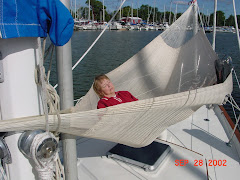
The water was choppy and it wasn't a good day for snorkeling, but we enjoyed the experience in short bursts. Phil had the right idea and in between snorkeling runs, he enjoyed the sun on the trampoline of the dive boat.

As the afternoon wore on, the water got more turgid and murky with the chop. We decided to go today since the weather is supposed to deteriorate later today and probably will be more conducive to staying in the harbor.

In fact at about 10PM we were hit with a fast moving squall that dropped torrential rains for about an hour and winds gusting to 50 knots. Joe had to rig a second aft spring line to keep Windreka's bow off the dock. The squall was apparently the harbinger of the front that's expected to pass over after midnight and drop the temperature approximately 15 degrees. That'll make it in the 60s...still warm by northern standards, but a lot cooler than the 80s we have for the past several days!

Even the Pelicans can be grumpy in this weather...
Pelican Food Fight

Monday, February 25, 2008

Day 81 - 25 February

Today we plugged into the local culture. After some minor preventive maintenance and some free coffee from the Marina office...at $2.50.foot, something should be free! We joined the Marathon Cruisers' net and caught up on the cruising gossip as it happens here in Marathon.

We took our dinghy through the huge, tightly packed mooring field in Boot Key Harbor and ended up back at Docksiders for lunch. On the way back to Windreka, we detoured out the entrance channel and headed for Pigeon Key...or Cayo Paloma in Spanish...about 1.5 miles to the west. We spent a pleasant several hours on a guided tour of the island and its significance.

The island is said to be named for large flocks of White-crowned pigeons which once roosted there. During the building of Henry Flagler's Overseas Railroad Key West Extension, a major construction depot was located there, the jumping off point for construction of the Seven Mile Bridge. A number of buildings from the Flagler era remain on the island. They are now part of the Pigeon Key Historic District. The island was originally only a slab of coral until the construction of the original railroad bridge when some 500 workers were housed and fed on the island until the railroad bridge was finished. You can read the story on the Wikipedia web site at: http://en.wikipedia.org/wiki/Pigeon_Key

Pigeon Key has a fascinating museum operated by Monroe County. The museum tells the story of the construction of the original railroad bridge joining Florida and the Florida Keys to Key West. The story can be read as part of the history of the Seven Mile Bridge...that parallels and replaced the old railroad bridge...at: http://en.wikipedia.org/wiki/Seven_Mile_Bridge.


The railroad bridge, originally known as the Knights Key-Pigeon Key-Moser Channel-Pacet Channel Bridge, was constructed from 1909-1912 under the direction of Henry Flagler as part of the Florida East Coast Railway's Key West Extension. The bridge was damaged by the Labor Day Hurricane of 1935, and refurbished by the United States Federal Government as an automobile highway bridge. It had a swing span that opened to allow passage of boat traffic, near where the bridge crosses Pigeon Key, a small island where a work camp for Flagler's railroad was located. Hurricane Donna in 1960 caused further damage. The present road bridge was constructed from 1979 to 1982 but the majority of the original bridge still exists.

It was a smooth trip to Pigeon Key but a choppy return and we got soaked. However, the tour and time on the island was well worth it. We ended the day as we started it...looking out to the west and planning the next leg of our cruise to Key West. Earlier in the day there was a manatee chewing on the sea grass just behind Windreka and coming up for a breath of air before returning to his breakfast. The manatee was gone by sunset, but we didn't need anything more than to watch the sun setting on another pleasant day in the lower Keys.

Day 80 - 24 February

Today was one of the more relaxing days we've spent on the trip. The sky was blue, the sea was green, the wind was on our nose again, but it was light. The captain even got a chance to take a power nap about halfway between Rodriguez Key and the turn into the channel leading to Boot Key Harbor and the town of Marathon.

We elected to tuck into the Marathon Marina which is just before the bridge. The marina is pricey and a bit "down at the heels" compared to other marinas we've stayed at. However, the people are friendly and almost all the showers, laundry and heads are working, so we aren't complaining too loudly. Also, there doesn't appear to be any other marinas that are any better...less costly, but not better...and we are close to the showers, head and laundry, have fresh running water, cable TV, and power to run our air conditioner.

It's tempting to pick up one of the many mooring balls in the inner harbor at $20/night with dinghy docking privileges, showers, heads and laundry all included. By comparison, Marathon Marina charges $2.50/foot which includes showers, heads and laundry, and cable for a daily transient cost of over a hundred dollars/day, tax included.

About an hour after we arrived and were in the final stages of organizing our lines, etc., our friend Phil arrived. Phil is a former coworker of Sarah's and a sailor..that/s Phil and Sarah on the right. We've been trying to get our cruising non-schedule and Phil's work and travel schedule aligned and we think we may have done so. Phil will be accompanying us aboard our cruising home for the next week and we hope to get the sails raised again soon. After our guest's arrival, we hailed the Marathon water taxi, Smorgasboat One (http://www.smorgasboat.com/), to pick us up at our slip and take us downtown to Docksides, a popular local water hole for some camraderie and dinner. Unfortunately, Docksides also has live entertainment each evening and we were gathered right behind the bandstand. So, we probably missed some interesting conversation. We had cruisers from six different Whitby Boat Works boats and more combined cruising experience we could measure.

After dinner, we caught a local taxi to take us back to our boat which is west of the harbor area by approximately 4 miles.

Saturday, February 23, 2008

Day 79 - 23 February

A nice day on the Atlantic. 75 degree temperatures, a south wind, sunny weather, and 1 foot waves.

We departed Elliott Key at 9:30AM on a rising tide to be able to negotiate Angelfish Creek at high tide (approximately 11:00AM). We motored south on Biscayne Bay and into Card Bay and the entrance to Angelfish Creek on the north end of Key Largo. The Creek exits into the John Pennekamp Coral Reef State Park and we hugged the east coastline of Key Largo until we arrived at Rodriguez Key at 3:30PM.

It was an east run of just six hours, but just enough time for Joe to demonstrate...again...his skill at underway Racor changing. We are averaging about 1-1/2 days per 2 micron Racor and Joe is already planning to install the fuel polishing and management system he has had on the back burner for several years now. Let's see, how many Racors equal a new fuel polishing and management system? Gotta be at least two boat units and $2000/$20 per Racor filter = 100. Changing filters underway over a hot engine with belts spinning, etc. is priceless, so it almost balances out. Let's do it!

We anchored in 5 feet of water again this evening and we can even watch the anchor settling into the sand. Boating is certainly different in Florida. Tomorrow we plan an early departure to let us get into Vaca Key and Marathon by late afternoon.

Did we mention the 75 degree temperatures, the south wind, and sunny weather?

Friday, February 22, 2008

Day 76 - 20 February


Flowers from Judy and Lucie! While walking along the waterfront in Lake Worth, Judy and Lucie brought back some flowers they found growing wild along the way. the bud was tightly closed when we received them, but opened up into the glorious display on the photograph at right. Sadly, they didn't survive the ocean off Key Biscayne and had to be discarded when we arrived at the Miami Marine Stadium anchorage. Fortunately for us there were two other natural spectacles for us to enjoy after we arrived at anchor.

The first was watching the sun set at Lake Worth South. Each anchorage has at least this one even in common. The sun sets and rises at each one and the natural spectacle is always a wondrous demonstration of a simple event that is always impressive and humbling to witness. The second event was a total lunar eclipse that was observable from the anchorage. The event began promptly at 8:45PM and continued on until after midnight when the moon's disk was finally full and shining again.

Day 78 - 22 February

What a contrast between yesterday and today. The weather was almost the same, but we kept to the inland ICW route from Miami to Elliott Key. We only had about a 3-1/2 hour leg to complete today so we allowed ourselves the luxury of sleeping late and enjoying the "pleasures of the harbor"...not the same meaning that phrase had a couple of centuries ago! The anchorage was picturesque and the weather was a balmy 75 with the same southerly wind that beat us up yesterday.


We eventually departed in the early afternoon and headed south across Biscayne Bay in a relatively flat expanse of sea-green water that was about 10 feet deep for most of the trip. We followed the proverbial "magenta line" for the afternoon and turned left after passing through a narrow cut identified by two sets of red-green marks.


We arrived at Elliott Key which is the largest of the 25 keys that make up Biscayne National Park. The anchorage...which hosts hundreds of boats in the summer...was almost empty and ours for the enjoyment. The water shoals quickly and we anchored about a half mile from shore in about 5 feet of water...we could even see the bottom and that was exciting!

Wednesday, February 20, 2008

Day 77 - 21 February

We anchored at Lake Worth South yesterday afternoon, the same ground we anchored in almost a week ago when we aborted out trip to the Bahamas. Instead of the Bahamas, we are now headed for the Florida Keys. The initial leg...Lake Worth to Miami...is about 65 miles and with a 7:30AM departure and conservative speed of 6 knots, we will be anchored in Miami by the end of the day...piece of cake!

However, the planning was excellent except for the water conditions which were exceedingly unpleasant. The Atlantic Ocean was choppy with 3-4 foot waves on our nose...where else would they be in a sailboat? We were able to motorsail for about half the trip with a close-hauled jib until the wind moved further south and headed us. At least the ocean was a lovely shade of green typical of South Florida waters.

For the first half of the trip, the sail helped stabilize the boat and gave us about a one-knot lift. We kept within a mile of shore to try to find some southward-bound current to further boost us. But by the time we hauled the headsail down, the combination of wind and sea from the southeast made up for a most unpleasant and bouncy ride to Miami. Even Windreka's fuel tanks weren't happy and all the accumulated sludge and dead bugs from more than 20 years decided to rise from the bottom and appear in the fuel pickup. The Racor filters that Joe changed yesterday in Lake Worth clogged and...once again...Joe had to crawl into the engine room, get personal with a hot engine and...this time...change both Racors to keep the engine working.

What made this memorable is that Joe changed both filters while the boat was bouncing and moving and while the engine was running...makes one want to say without the engine skipping a beat, but the reason the filters had to be changed was that the engine was skipping beats! Once the clogged filters were replaced, the engine purred all the way to Miami.

After what seemed like two days of travel, we entered Government Cut as a cruise ship was heading out in a northerly direction. We made our way past the containerships, the harbor tugs crossing back and forth, a good portion of the Miami cigarette boat fleet...or was it just the noise that made it seem like there were a hundred of them? It was not a pleasant way to end the ordeal of being abused by the ocean, but we made our way past the commercial section of the waterfront and back to the ICW and Rickenbacker Bridge. We turned left just in front of the bridge with several emergency vehicles on it and two water rescue vessels in the water near the bridge. After another few minutes we were at anchor near the Miami Marine Stadium which was the setting for water shows until 2005 when it was severely damaged by a hurricane. Here's what Wikipedia has to say about this Miami-style venue:

"The Stadium was host for many world class powerboat events including Unlimited Hydroplane, Inboard, Outboard, Performance Craft, Stock, Modified, Grand National divisions as well as other special event races...The last major race in the Stadium was the 1987 Inboard Hydroplane national Championship.

"The Stadium utilized a floating stage in front of the grandstand for diverse activities such as classical concerts, Rock and Roll shows and the annual Easter Sunrise Service.
Due to restrictions in use, political pressures from within the City of Miami, and the lack of proper promotion the Stadium saw a gradual decline in events...By the early 1990s powerboat racing in the Stadium was in reality only a memory.

"In 1992 Hurricane Andrew struck the Miami/Dade County area. Engineers for the City condemned the structure...Since that time the Stadium has been allowed to sit with no attempt at maintenance..."

Read the full story at: http://en.wikipedia.org/wiki/Miami_Marine_Stadium

Whatever it's history, the anchorage was a tranquil end to a decidely "untranquil" day with the skyline of Miami in the background. Now if only the airplanes taking off from Miami Internationaly had a different flight path...